

The Twisted Tale Of Molly Zee by Michael Siemsen
A short story
Mill Flat had been incorporated as Fort Jubey in 1858. A town Mayor, some fifty years later, thought it sounded too much like “jew” and had it named after the dull landscape and the paper mill that closed down twenty years later. No one really cared at the time.
Nowadays, there’s been a push to get back the old name and rediscover the honored military tradition hidden beneath the decaying surface of the town. A city councilman submits it for consideration, the council supposedly thinks it over, and every time they end up voting it down. “Too costly at this time,” they’ve said for the past four years.
Truth was, Fort Jubey had been an Indian-control fort. A place the U.S. could hold scrappy injuns that didn’t wanna go along with the laws of encroaching civilization. There had been a few battles around the fort but they were really more like attempted prison breaks by Navajo and Hopi tribes that had ended in death for the reds.
A teacher on the council had hoped some shining moment could be found somewhere mixed in with the bad—some long-lost tale of a famous person’s origin or visit or maybe a first, like the very first bubble bath was taken there, or some such nonsense. But alas, Fort Jubey offered no such commendable history to be dug up. Thus, Mill Flat was still Mill Flat and would remain so as the reporters began to write the twisted tale of Molly Zee.
The nearest bonafide city to Mill Flat is Dunham, home of The Dunham Observer. It was the only newspaper you could get in Mill Flat that would occasionally have news about Mill Flat. Most of the time it would be an obituary or some paid advertisement, but now and again there would be real headlines about the town.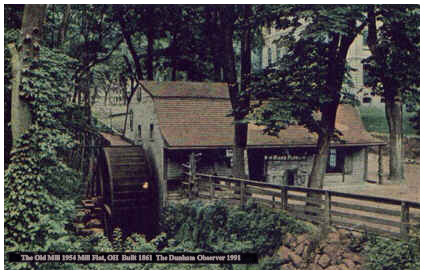
When the whole Molly Zee thing happened, TV news and other newspapers were interested in the story, but, until later, not interested enough to actually send a living, breathing reporter. So they would get their info from The Observer or just take an already done story from them and give the paper credit.
As the investigation unfolded, the whole town was reading The Observer, looking for stuff they didn’t hear word of mouth. You could tell when the out-of-town news folks started calling the Dunham paper because that’s when the stories started getting all professional-like and flowery. You knew for sure that someone at The Observer was trying to get noticed so they would get a job offer from some big city or national paper.
A week after the big day, the front page story started off with, “Just shy of sixty miles East of Dunham, Mill Flat is the type of town where one would go to buy a monkey.”
At first everyone thought it was pretty funny to be referred to not as an old train town or former Army fort, but as a place you go to get a monkey. What the hell was a reader supposed to picture from a description like that? What kinds of streets and houses and foliage does a “monkey town” have, exactly? How do people dress in a place like that? You figure a reporter would use that kind of wording to evoke imagery, right? But no one could really figure out what you were supposed to envision, like when you read about a “college town” or “suburban sprawl” you pretty much get the picture. But then when everyone really thought about the whole monkey thing, they sorta just looked around, shrugged, and nodded. It was true, after all.
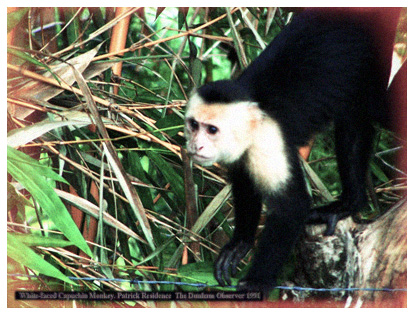
About ten years ago, you had folks coming from New York City, San Francisco, and Hollywood just to pick up a monkey. It all started this one time when someone in town got a capuchin monkey (think of the bad monkey from Indiana Jones) for someone else’s sister, then the sister of course had people asking “where do I get one?” and a booming business grew from there. At one point at the end of the last decade most houses in Mill Flat had shelters out back with at the very least a macaque or marmoset, and a few families had made it their primary source of living.
In their heyday, the Chesterfields had, no lie, more than ten cebidae (your music box monkey with the fez), twenty-plus aotidae (night/owl monkeys…real popular with rich Hollywood trendsetters due to the cute-factor), and five or more old-world monkey’s from Africa or Asia that were a lot harder to smuggle in.
Even so, the monkey trend subsided and too much attention came to the town as being full of smugglers or otherwise non-law-abiding types, so the stock of primates suddenly dropped sharply. Some raids had happened and a bunch of folks had to hide their stock…usually at the bottoms of their wells. You ain’t never seen nothing like that before.
They had these animal cops or humane society folks busting people left and right. If they had heard about a family being “in the game” and didn’t find nothing when they came out, they would still search around the property. And unless the owners had done it right—like burying the evidence somewhere off their property—the investigators would find the bodies. I seen a picture of a row of thirty-or-so monkey corpses all lined up beside a road like those photos from wars where you see all the dead soldiers or civilians. But ‘cause they were all these little monkeys, it made you think of a bunch of dead kids all laid out like that.
 Yeah, the reporters really wanted to get the town’s colorful past out there to paint some background behind Molly Zee’s unfortunate fate. As if the grim story weren’t amply full of sickening facts.
Molly wasn’t from Mill Flat. No, she had come from some little town in New York State where all the girls wanted to be in musicals on Broadway. One of the dirtier lowlife’s of the town, Larry Hatch, had gone looking for young sex in the big city. Somewhat for himself, but more so for folks passing through town. There were no hookers in Mill Flat up to then and he figured he would go get him a fresh one and turn her out.
There had been this rumor that Greyhound was going to close down their “terminal” and Hatch, being the terminal manager, loved his job. He loved to say he hated his job, but everyone knew the truth: he loved the power. See, there were no jobs in Mill Flat that offered a worker any measure of authority. Not even the police department ‘cause no one cared about the police. They were just like everyone else except for the uniform they occasionally wore. But the terminal manager at the Greyhound station could keep you from going where you wanted to go. He could get you on a full bus for the right price (favors preferred over cash) and he could let you sleep inside the station, if you had nowhere else to go. When that cushy job seemed to be coming to an end, he went off for a week and brought back Molly Zee.
So anyway, that’s all the background, I guess. On to the day. People say the arguing started the day she got to town, but the accepted story puts it all at a week before. Molly Zee had been a resident of MF (the initials don’t escape the town’s kids) for a few years already.
One night, Hatch starts hollering at Molly Zee about how she seems to be spending too much time with Gary the Gargoyle (don’t ask). Is she charging him every time? Why’s she gotta have lunches and dinners with him? She tells Hatch to calm down, that she charges him enough, and she’s just trying to keep a good customer happy.
The next day, what’s she do? Hangs out at Gary’s house all damn day. Hatch finds out and him and Molly start having words again, loud enough for all the neighbors to hear. It goes on like this until the night when everything goes down. Hatch tells her she doesn’t have to prostitute herself anymore. That he realized all of a sudden that he loves her, wants to have rugrats with her, and he doesn’t want her talking to no other guys no more. Molly Zee tells him something to the affect of “it’s a sweet thing to say, but sorry, I’m gonna do what I wanna do.”
Sorry, a little more back-story so this makes sense. Remember the monkey town thing? Well, Hatch had basically made himself the town veterinarian for primates. To make more side money during the “monkey boom”, he learned a bunch of stuff on the internet—yes, even Mill Flat folk have internet—about anatomy and simple surgery on various kinds of primates. After the boom was over, Hatch fancied himself the closest thing to a doctor that the town had. When this kid named TJ smashed up his elbow falling off his dirt bike, Hatch told the parents not to risk taking the kid all the way to the hospital. He said that he could fix it himself. Well, sparing the gory details, the kid ended up having the lower half of his arm amputated a month later. There’s no forgiving that kind of oops.
So, Molly Zee tells Hatch she’s going her own way. She goes to sleep that night and wakes up, half-ass tied to the bed with duck tape, twine and a robe belt. She sees Hatch’s wild eyes over her and he’s got one of those syringes from his former monkey vet job in his hand. It’s full of who-knows-what and Molly Zee decides to take the “you’re a crazy S-O-B” approach instead of the “I love you, I don’t know what I was thinking” route.
She looks around as she’s screaming at him and sees he’s got a roller cart next to her with all sorts of surgical instruments and more needles. She asks him what he’s got in his psycho brain and he tells her what he’s going to do. He says if she ain’t gonna close up shop, he’s gonna close her shop. He shows her the stitching line, already threaded through a curvy needle. She keeps screaming at him, hoping the neighbors will hear and do something before it’s too late. He starts pulling down her pajama pants and she goes even crazier, struggling all around. He tells her that if she keeps fighting like that, it’s gonna be a much messier job than it needs to be and she can’t blame him after. What he didn’t know was that she had gotten her one arm free from the duck tape.
In her final, desperate attempt to save her hoo-haw from mutilation, she reaches to his cart and grabs the first thing her hand touches. It turns out to be a big, empty syringe, and he hears the clanging, turns around to look, and finds the thing zooming to his face. She nails him square in the left eyeball and Hatch goes flying back, his hands flying up out of reflex and one of them smashes into the plunger. The thing shoots air into the eyeball and the eye swoll up so much . . . well, you can imagine what that might do.
So Hatch is rolling around on the floor, yelping like a dog hit by a truck, and he’s crying out to her things like “why would you do that to me?” and “I love you!” while she’s untying the rest of her limbs. When Molly Zee finally gets herself free, she stands over him, thinking about what he was going to do to her, and she decides a man like him has got no purpose on the Earth. She starts out poking him with the curvy needle he was gonna use on her, really tearing him up. Then she starts shooting him up with all the stuff he had on the cart. He’s rolling around all loopy from the drugs and swatting at her, trying to defend himself, but he wasn’t a large man and had one hand over his former eye.
When she decides she needs to finish the job, she goes out to the garage and brings back in the chainsaw. No…the story doesn’t get to go there. She couldn’t get it started with the pull cord. She throws the thing at him and goes searching for something else. All she can find are rusty hedge clippers, a dull spade, and a pile of cinderblocks. For whatever reason, she decides to go with a cinderblock and wrestles one back into the bedroom. She stands up on the bed, struggles to get the thing high over her head, and with Hatch weeping and begging like a little girl, she spits on him and sends the thing headways.
After the trial, sentencing (fifteen years in Copenhagen State), and the media onslaught had passed, Mill Flat quieted back to normal. Folk got back to gossiping about boring stuff and returned to whatever they could to pay for the lights and TV dinners. One funny thing that no one ever really thought about for a while was that Greyhound never did shut down that bus station. And guess who’s the boss over there now? Gary the Gargoyle. Yeah, pretty messed up or pretty damned funny, depending on your outlook, I suppose. So you wanna buy a monkey or what?
~ END ~
< BACK